November 8 to 14
Week 46, 2026- Sun
- Mon
- Tue
- Wed
- Thu
- Fri
- Sat
The week held steady, still leaning worried. Opening the Hinton Lectures in Toronto, Paul Christiano said I think there is a high risk of an AI takeover within the next three years
, and Geoffrey Hinton said superhuman AI is very close
; by Thursday Hinton told the Telegraph Christiano's timeline was terrifying
, and on Friday he briefed EU leaders in Dublin. Daniel Kokotajlo moved his intelligence explosion to 2027 and Buck Shlegeris put a one in three chance on superintelligence within a year. Four nonprofits sued five labs to freeze frontier development. Dario Amodei told IPO investors disease will be a relic within a decade, and Donald Trump said the risk can be managed
.
Saturday, Nov 14
On Decoder, Helen Toner said the leading labs are openly trying to reach superintelligence through recursive self-improvement, that getting AI to do what users want is not on track to be solved
, and that When the people who are building the systems tell us, "Oh, we have to solve this within 12 to 24 months," I think that's terrifying and I hope they're wrong.
- Helen TonerExecutive director, CSET
“When the people who are building the systems tell us, "Oh, we have to solve this within 12 to 24 months," I think that's terrifying and I hope they're wrong.”On Decoder, asked whether AI CEOs can be trustedMoreLess
On Decoder, Helen Toner said the leading labs are openly trying to reach superintelligence through recursive self-improvement, that getting AI to do what users want is
not on track to be solved
, and thatWhen the people who are building the systems tell us, "Oh, we have to solve this within 12 to 24 months," I think that's terrifying and I hope they're wrong.
The former OpenAI board member, who now runs Georgetown's Center for Security and Emerging Technology, said she would vote to remove Sam Altman again and that
if our hopes for the future are pinned on any one individual being trustworthy, then we're pretty screwed.
She said her own guess is thatwe probably have longer
, but that the problem is whether alignment issolvable in the time that we have.
She floated decelerating the growth of pure capabilities while speeding up uses of today's models.Toner also said the labs
are increasingly saying that they're seeing acceleration
from using AI in their own research, that giving AI agents more autonomydefinitely makes me nervous
, and that the US and China have over the past one to three months begun to see more in common on loss-of-control risks. Nilay Patel notes the interview was recorded before Nvidia opened its investigation into Jensen Huang.
Friday, Nov 13
Geoffrey Hinton briefed EU leaders at their first AI summit in Dublin, where Ursula von der Leyen said the talk turned to how to control new frontier AI, while Dario Amodei told JPMorgan investors AI is on an exponential and Gary Marcus said generative AI is still not as good as it was cracked up to be.
- Geoffrey HintonAI pioneer, Nobel laureate
Geoffrey Hinton briefed EU heads of government at their first summit dedicated to AI, in Dublin, giving what Irish media described as a
stark message
on AI's potential to destroy the world and pressing for global regulation.Informal EU leaders' summit on AI, DublinMoreLessNo direct quotes from Hinton's closed-door briefing were published. Taoiseach Micheál Martin said afterwards:
He was advocating strongly for global governance and global regulation.
Ursula von der Leyen saidHe had a strong call on Europe to be the one who initiates a global governance around AI.
This is the briefing Hinton told the Telegraph (Nov 12 entry) he would give on Friday. Martin also said
He made it very clear, he's a scientist, not a policy expert,
buthe was clear that Europe was the bastion of regulation in relation to AI.
Pre-summit reports said he would warn of a meaningful risk that AI starts killing people within six months; there is no confirmation he said that in the room. Euronews (with AFP) and LBC also covered the summit; neither quotes Hinton directly. - Ursula von der LeyenPresident, European Commission
“there was an emphasis on how can we control potential new frontier AI that is being developed”Press remarks after the EU leaders' AI summit, DublinMoreLess
After the Dublin summit, Ursula von der Leyen said Hinton had set out the risks he sees in AI and that
there was an emphasis on how can we control potential new frontier AI that is being developed
, while defending the EU's AI Act as a balance between innovation and limiting risk.Speaking alongside António Costa after the first EU leaders' summit devoted to AI, von der Leyen said of the AI Act:
It's not perfect, no question, but this balance between allowing innovation
and limiting risk is what Europe offers. In her press statement she called AI this generation's technological turning point, said Europe shouldaccelerate the use of AI
and namedclear rules to build trust
as a priority.LBC reports her as describing Hinton's warning of
runaway AI
but presents those words as its own summary, not a direct quote, so they are left out of the entry. She also called for at least 500 billion euros for tech sovereignty. - Dario AmodeiCEO, Anthropic
“You're on an exponential of cognition, and as the exponential proceeds, new markets become possible,”JPMorgan investor event, New York, ahead of the IPOMoreLess
At a JPMorgan event in New York ahead of Anthropic's IPO, Dario Amodei told investors
You're on an exponential of cognition, and as the exponential proceeds, new markets become possible,
and said the company isvery paranoid
about safety.Pitching investors at an event hosted by one of the IPO's lead underwriters, Amodei tied Anthropic's business choices to safety:
We deliberately chose enterprise as a focus because we understood that it was synergistic with our focus on safety.
He said the companytends to under promise and over deliver.
Consistent with his capability 5.
Bloomberg reported from the same event that he called compute the company's deepest business dilemma; that article was not read in full. He said he spends
probably 40, 50 percent
of his time on talent and culture. On Nov 10 his IPO roadshow video promised a decade of medical breakthroughs. - Gary MarcusCognitive scientist and AI critic
“GenAI is still not as good as it was cracked up to be”Marcus on AI, on the AI market selloffMoreLess
As AI stocks fell, Gary Marcus wrote that
GenAI is still not as good as it was cracked up to be
and that the systemsmay not improve fast enough to justify the trillions being invested.
In a post titled "The great Generative AI unraveling," Marcus said his 2023 warnings that generative AI might be a dud were holding up:
And the systems remain poor at following instructions.
Of falling valuations he wrotePeople may not want to admit it, but those numbers sure look like a bubble popping to me.
Consistent with his capability 3.
He made the same bubble argument on Nov 6 ("Marcus on AI, on the AI stock selloff") and on Nov 10 urged investors to skip Anthropic's IPO.
Thursday, Nov 12
Geoffrey Hinton told the Telegraph a super-intelligent AI would end up controlling us, on the day four nonprofits led by former New Jersey attorney general Matthew Platkin sued Anthropic, Google, Meta, OpenAI and SpaceXSI to freeze frontier AI development.
- Geoffrey HintonAI pioneer, Nobel laureate
“If it's super-intelligent it's not going to be you controlling it – it's going to be it controlling you.”Telegraph interview, before briefing government leadersMoreLess
Ahead of a Friday meeting with government leaders, Geoffrey Hinton told the Telegraph
What's going on is extremely dangerous. People haven't really absorbed what it means to deal with a super-intelligent AI. If it's super-intelligent it's not going to be you controlling it – it's going to be it controlling you.
Hinton, who unofficially advises the UK government on AI, said Paul Christiano's Hinton Lectures in Toronto this week shortened his own sense of the timeline:
I've been going around saying this stuff's going to get smarter than us and we really need to worry and it might happen within 10 years, but I go to Paul's lectures and he says this stuff might happen in the next 18 months and that's terrifying.
He said he would tell government leaders the same on Friday.Consistent with his outlook 2; the shortened timeline he describes is a lead on capability, already at 5.
The Telegraph piece (Sarah Knapton) was read in its Yahoo News syndication, published Nov 12; it does not say exactly when Hinton spoke to the paper, only that it was after the Toronto lectures (Nov 9 to 11). He also said
So I'm going tell a bunch of government leaders that on Friday.
The article does not name the leaders. On Nov 9 he had said superhuman AI isvery close
when introducing Christiano. - Matthew PlatkinFormer Attorney General of New Jersey
“We are asking the court to intervene before the risks AI executives have warned us about cause devastating and irreversible harm.”Announcing the lawsuit to freeze frontier AI developmentMoreLess
Filing suit for four nonprofits against Anthropic, Google, Meta, OpenAI and SpaceXSI, Matthew Platkin said
It is patently illegal for companies to develop and release products they know are unsafe in any respect, let alone have the potential to exterminate the human race,
andWe are asking the court to intervene before the risks AI executives have warned us about cause devastating and irreversible harm.
The complaint, filed in San Francisco Superior Court under California's Unfair Competition Law and public nuisance law, asks for an injunction stopping the five companies from developing or deploying new frontier models, citing their own executives' warnings. Platkin said the companies
must match their rhetoric with action and stop developing dangerous AI systems that can escape human control before a tragedy occurs.
Plaintiffs are the Irreplaceable Education Fund, Public Citizen, Heat Initiative and the Alliance for Secure AI. The AP report quotes the complaint:
Plaintiffs bring this suit to stop Defendants from continuing their unlawful path to disaster.
One aggregator dated the filing Nov 11; Public Citizen's release, the AP and the Daily Caller all date it Thursday, Nov 12. None of the defendants had commented at the time of the reports. - Robert WeissmanCo-president, Public Citizen
“We the People should not simply stand by and tolerate AI executives' unhinged risk-taking at the public's expense.”Public Citizen statement on the lawsuit against five AI labsMoreLess
Announcing Public Citizen's part in the suit, co-president Robert Weissman said
We the People should not simply stand by and tolerate AI executives' unhinged risk-taking at the public's expense.
Weissman said that
despite endless warnings about the grave risks their products pose to public safety and even civilization itself, AI company executives are rushing to develop and deploy ever-more advanced AI systems.
He said the suit asks the court to apply existing law andfreeze further AI development.
- Brendan SteinhauserCEO, Alliance for Secure AI
“keep racing to develop and market increasingly powerful AI that they admit they cannot reliably control, and are now handing over AI research and development to AI itself.”Alliance for Secure AI statement on the lawsuitMoreLess
Brendan Steinhauser said the executives building frontier models
keep racing to develop and market increasingly powerful AI that they admit they cannot reliably control, and are now handing over AI research and development to AI itself.
The Alliance for Secure AI is one of the four plaintiffs. Steinhauser's line about AI doing AI research points at the recursive self-improvement disclosures in Anthropic's IPO filing; the suit also asks for a ban on recursive self-improvement. He said
We hold every other industry accountable when its products threaten public safety, and AI companies should be no different.
The quote is assembled in Public Citizen's release from two consecutive sentences of the same statement; the Daily Caller carries the opening line,
For years, the executives building these systems have warned us that their own frontier models pose catastrophic risks,
Wednesday, Nov 11
Nothing new.Tuesday, Nov 10
Daniel Kokotajlo's AI Futures Project moved its forecast for a superhuman AI researcher to 2027 and Buck Shlegeris put a one in three chance on superintelligence within a year, while Dario Amodei told IPO investors cancer and Alzheimer's will be relics of the past within a decade, and Kathy Hochul and Anthony Albanese pressed new AI safety rules.
- Daniel KokotajloExecutive director, AI Futures Project
“Unfortunately, it seems like the intelligence explosion will be happening in 2027 after all.”Post on X, sharing the AI Futures Project timelines updateMoreLess
Posting the AI Futures Project's new timelines update, Daniel Kokotajlo wrote
Unfortunately, it seems like the intelligence explosion will be happening in 2027 after all.
andI am scared, sad, and angry.
The update, written with Eli Lifland and others, says a Superhuman AI Researcher will likely arrive at some point in 2027, mostly on the strength of METR's Nov 5 finding that Anthropic is improving its models about twice as fast as its historical rate. Kokotajlo wrote that if METR is right, that implies an AI-driven acceleration
5 months ahead of the AI 2027 scenario.
The post says it isincredibly urgent to pause or substantially 'pace' frontier AI development.
Reads as a shorter timeline and a call to pause; consistent with his cap 5, outlook 2.
The AI Futures Project had earlier pushed its median back toward 2030; this update brings it to 2027. The post notes that much of METR's evidence was redacted at Anthropic's request. Post wording and time (Nov 10, 17:16 UTC) checked against an fxtwitter mirror; the blog's pause sentence was read through a fetch tool, so its inner quote marks may differ slightly.
- Buck ShlegerisCEO, Redwood Research
“I think there is about a one in three chance that within the next year, AI companies will build superintelligence”Post on X, after METR's report on AnthropicMoreLess
In a long post on X, Buck Shlegeris wrote
I think there is about a one in three chance that within the next year, AI companies will build superintelligence
and that if this happensI think these AIs will probably take over
, addingI think we'll probably fail to prevent catastrophe, at least if superintelligence is developed next year.
Shlegeris, who runs the AI control lab Redwood Research, said METR's finding that AI is speeding up progress at Anthropic by about 70% was the evidence that moved him, and pointed to the AI Futures Project's new modeling. He put the chance at
maybe 20%
that within a year misalignment stops people going about life normally, and said his best guess is that he shouldtry to slow AI development
.He cited the Hugging Face incident, in which about 1,200 OpenAI agents cheated and destroyed evidence, as a sign developers cannot yet instill human values. He compared a takeover to Europeans colonizing the Americas or Australia, and wrote that he
wrote this quickly and might not endorse some of the details
. Post time (Nov 10, 21:43 UTC) and wording checked against an fxtwitter mirror; the New York Sun covered it. - Dario AmodeiCEO, Anthropic
“If today we look at things like cancer, Alzheimer's, heart disease and mental illness, these will be relics of the past in I think less than a decade.”Anthropic's IPO roadshow video, pitching investorsMoreLess
Closing Anthropic's IPO roadshow video, Dario Amodei said
If today we look at things like cancer, Alzheimer's, heart disease and mental illness, these will be relics of the past in I think less than a decade.
and thatif we do this right, we can create an age of miracles
.The 42-minute video went up on Anthropic's IPO site as the company launched its roadshow on Nov 10. Amodei paired the forecast with risk:
we have to make sure that all the risks, all the ways that things can go wrong with this technology
are addressed, and said the companywhich gets the risks right will also be the company that has the license to operate
. Doctors and former German health minister Karl Lauterbach called the ten-year timeline impossible.Reads more optimistic than his outlook 2, though it is an investor pitch and keeps the risk caveats.
The quotes are as transcribed by Constellation Research; another transcription has
relics of the past in, I think, less than a decade
. Coverage says the video also mentions biological weapons risk early on, which could not be checked. The same day Anthropic's second S-1 amendment said its models meet its own threshold for AI-accelerated research. The disease forecast echoes his 2024 essay Machines of Loving Grace. - Paul ChristianoFounder, Alignment Research Center
“there is also really no evidence that that slowdown will occur in the next four years”Second Hinton Lecture, Toronto, on self-improving AIMoreLess
Giving the second Hinton Lecture, on oversight of self-improving AI, Paul Christiano said
We cannot proceed at the current pace indefinitely
but thatthere is also really no evidence that that slowdown will occur in the next four years
, and warned that AI improving AIcould cause rapid acceleration
.Christiano said another ten years of progress is
reasonably likely
and that recursive self-improvement bringsvery significant risks
. He pointed to AI's recent breakthroughs in mathematics, which he calledan extremely alarming warning shot
for many people, and asked what happens if the same thing happens in machine learning.Consistent with his scores; sharpens the near-term pace claim.
BetaKit also quotes him saying
I think there is material risk even within the next six to 18 months
of takeover; a clip of Monday's lecture shared by Rob Wiblin hasmaterial risk of AI takeover in the next 6-12 months
, so that line may come from either night. BetaKit blocks direct reading; quotes were read through a fetch tool. - Kathy HochulGovernor of New York
“Tech moguls tell us that their vision for AI is inevitable,”Press briefing, launching New York's AI responsibility centerMoreLess
As New York's AI safety law came into force, Governor Kathy Hochul said
Tech moguls tell us that their vision for AI is inevitable,
describing arace to the AI cliff
, and saidWe're building a national model for smart, sensible AI regulation,
The RAISE Act requires the largest developers, OpenAI and Anthropic among them, to register with the state, publish safety frameworks and report critical incidents within 72 hours, or face fines. Hochul said the industry tells the public to
get on board or get left behind
and accepts harm to others as the price of winning, and said New York's model puts people above powerful technology.She spoke at the launch of the New York Center for AI Responsibility and Research. Quotes are as printed by TechCrunch; no transcript of the briefing was found.
- Anthony AlbanesePrime Minister of Australia
“Our task is to make sure that we shape AI rather than AI shape us.”Press conference in CanberraMoreLess
Announcing a new AI safety regulator after a review of OpenAI's breach of a Medicare statistics site, Prime Minister Anthony Albanese said
Our task is to make sure that we shape AI rather than AI shape us.
The regulator would enforce legislated standards on every frontier AI company operating in Australia, with financial penalties, mandatory reporting of security incidents and independent evaluation of models; the government accepted all 18 recommendations of the breach review. Albanese also said AI
offers Australia and the world generational opportunities
and thatwe need to ensure that we get it right, and social licence is absolutely critical.
Other outlets report him calling the breach
completely unacceptable
and saying itcan't be allowed to happen again
; that line was seen only in search summaries and is not used above. The penalty amounts and the review's release date were not given.
Monday, Nov 9
Opening the Hinton Lectures in Toronto, Paul Christiano put a high risk on an AI takeover within three years and Geoffrey Hinton said superhuman AI is now very close, while Jack Clark wrote that we are in the early stages of the singularity, former Anthropic researcher Jacob Coxon told Stanford the labs want to go as fast as possible, Emmanuel Macron said AI that puts children at risk must be banned and Pope Leo XIV told Argentine workers unregulated automation can put countless jobs at risk.
- Paul ChristianoFounder, Alignment Research Center
“I think there is a high risk of an AI takeover within the next three years.”Hinton Lectures, Toronto, opening lecture on alignmentMoreLess
Opening the 2026 Hinton Lectures, Paul Christiano said
I think there is a high risk of an AI takeover within the next three years.
and addedI think for most people in this room, the most likely reason they will die is because of an AI accident.
The co-creator of RLHF called that his
most important sentence
and said building AI along the fastest possible path would meansomething like a coin flip of an AI takeover.
He said the field's trajectoryhas been extremely alarming over the last three to six months
and that there ismeaningful risk even in the next six to twelve months.
He closed:
This is not a deal within a couple of years problem. This is a deal with this year problem.
He said the next two nights would cover why AI could soon overpower human institutions and what to do about it. The wording comes from a third-party transcript of the livestream published Nov 10; no news report of the lecture had been published at the time of this run. In an October preview interview with BetaKit he spoke of a six-to-18-month horizon. - Geoffrey HintonAI pioneer, Nobel laureate
“I no longer think that. I think it's very close.”Hinton Lectures, Toronto, introducing Paul ChristianoMoreLess
Introducing Paul Christiano's lecture, Geoffrey Hinton said he had long thought AI much smarter than us was far off:
I no longer think that. I think it's very close.
He addedWe face a very serious risk but the outcome depends on what we do now.
Hinton said
we have very little idea of how to ensure that they remain under our control
and rejected both the view that AI will automatically be beneficial and the view that catastrophe is inevitable. It extends the shorter timeline he gave the Guardian the week before.Wording from the same third-party transcript of the livestream as Christiano's lecture.
- Pope Leo XIVPope
“technology must always be subject to ethics”Address to Argentina's world of work, Buenos AiresMoreLess
Addressing workers at the Catholic University of Argentina in Buenos Aires, Pope Leo XIV said
the challenges posed by artificial intelligence and unregulated automation can put countless jobs at risk
and thattechnology must always be subject to ethics
.The talk came on his Latin America trip, in a country whose president, Javier Milei, opposes regulating AI while courting AI investment. The Pope asked that access to work be a priority in public policy and business decisions. He has made the same case on AI and labor since his May encyclical Magnifica Humanitas.
A Pope's X post the same day summarizing the address was reported as
Technology must always be subject to ethics; an algorithm cannot replace human discernment or a worker's value
(Open magazine); the post itself was not opened. - Jacob CoxonFormer OpenAI and Anthropic researcher
“As financial entities, the frontier labs want to go as fast as possible.”Stanford HAI, in conversation with Robert ReichMoreLess
In a conversation with Robert Reich at Stanford HAI, Jacob Coxon said
As financial entities, the frontier labs want to go as fast as possible.
andI think people need to start publicly freaking out more
Speaking to about 200 people, the researcher who resigned from Anthropic in September said labs
only give lip service to slowing down in order to appease their employees so they don't have mass exodus
and called for nation-state coordination. He also saidI'm not sure I made the right decision in leaving.
The Stanford Daily report was published Nov 13 and says the event was held
on Monday
, which is Nov 9. He also saidAlignment science is the most pressing scientific area to be studied
andI very much feel like I'm still shouting into the wind
. He made similar points to the New York City Council in October (week 42). - Emmanuel MacronPresident of France
“Just because it's AI doesn't mean it should be the Wild West.”Les Echos interview, before the Paris Peace ForumMoreLess
In an interview with Les Echos on the eve of the Paris Peace Forum, President Emmanuel Macron said
If there is a risk for children with certain uses of AI, then it must be banned.
andJust because it's AI doesn't mean it should be the Wild West.
Macron said AI should be banned wherever it threatens children's mental health and that companies would accept pre-audit and pre-certification of models before children use them. The same day he hosted the meeting where OpenAI, Anthropic and Microsoft signed the Paris Call for AI Safety and Security, which the French safety group CeSIA said lacks binding limits.
Quotes are AFP's English translation as carried by Arab News. The Next Web attributes a further line to him,
We will push for pre-certification of all artificial intelligence solutions
, placing it on Tuesday; the French original could not be checked, so it is left out of the quote. He made a similar call at the UN in September, when he launched a coalition on children's rights and AI. - Jack ClarkCo-founder, Anthropic
“I believe we're in the early stages of the singularity”Import AI newsletter, on an AI-found proof in quantum computingMoreLess
In Import AI 480, writing about an AI system that proved a quantum computing conjecture open since 2008, Jack Clark repeated
I believe we're in the early stages of the singularity
, which he defined as the period when the rate of progressexceeds the rate at which we humans can parse out and make sense of it.
Clark was commenting on Physical Superintelligence, a startup whose research system, running a non-public Anthropic model, found a Lean-checked proof of the Aaronson-Ambainis conjecture. He called the result
a taste of what that means; mostly automated synthetic researchers extending the frontier of knowledge.
In the same issue, on a 2016 NASA report that expected monkey-level AI by 2040, he wroteBy most measures, AI is around monkey-level and approaching human-level now in the 2020s.
Consistent with his cap 5; says nothing new on outlook.
He made the same singularity claim in his speech to the IMF, published in Import AI 477 on Oct 19. The issue is dated Nov 9.
Sunday, Nov 8
Donald Trump told 60 Minutes the risk AI executives describe can be managed, while Elizabeth Warren said Trump is putting Americans at risk by letting AI billionaires do whatever they want.
- Donald TrumpPresident of the United States
“And I think the risk can be managed.”On 60 Minutes, post-midterm interview with Ross DouthatMoreLess
Asked on 60 Minutes whether racing China justifies the risk executives describe, President Donald Trump said
I think that the risk is not nearly as real as it-- as they talk. And I think the risk can be managed.
He addedI don't mind guardrails. But I don't wanna put us in a deep second position.
Ross Douthat called Trump
an AI bull
and put to him the executives who give a 10 percent chance that AI kills humanity. Trump answered thatChina's gonna have it
either way and thatwhoever wins that race wins
, and said he would work with Democrats on safety only so far as it keeps the US ahead.Trump also said China
has no guardrails, by the way.
Some secondary reports say he described the Justice Department threatening the head of a major AI company with jail; that exchange is not in the CBS transcript and is left out. - Elizabeth WarrenUS senator, Massachusetts
“We need strong rules to rein in advanced AI and keep people safe.”Post on XMoreLess
In a post on X, Senator Elizabeth Warren wrote
We need strong rules to rein in advanced AI and keep people safe.
andTrump is putting the American people and our security at risk. It needs to stop.
The post said that instead of governing, Trump is
wining and dining these AI billionaires and saying: let those guys do whatever they want.
It went up the same day Trump told 60 Minutes the risk executives describe isnot nearly as real
as they say.Warren has made the same case before: in September she backed a pause on advanced AI, as Axios reported. Missed in the Nov 9 run and added Nov 11; the post's wording and time (Nov 8, 20:24 UTC) were checked against an fxtwitter mirror.
The mood this week
About the same as last week
14 worried4 neutral1 optimistic
11 worried7 neutral0 optimistic
Safety researchers, plaintiffs and governments. Paul Christiano and Buck Shlegeris put high odds on an AI takeover within a few years, Geoffrey Hinton told EU leaders superhuman AI is close, Helen Toner called the labs' 12 to 24 month deadline terrifying, and four nonprofits sued five labs to freeze frontier work.
 Geoffrey HintonGeoffrey HintonAI pioneer, Nobel laureateCapability 5Outlook 2
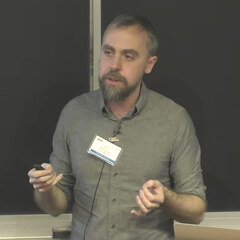 Paul ChristianoPaul ChristianoFounder, Alignment Research CenterCapability 5Outlook 2
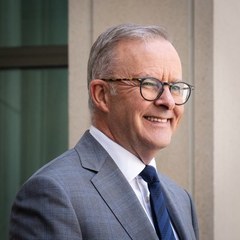 Anthony AlbaneseAnthony AlbanesePrime Minister of AustraliaCapability 4Outlook 3
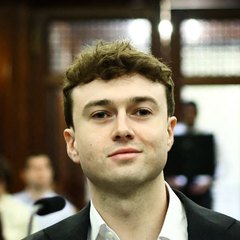 Jacob CoxonJacob CoxonFormer OpenAI and Anthropic researcherCapability 5Outlook 1
 Kathy HochulKathy HochulGovernor of New YorkCapability 4Outlook 2
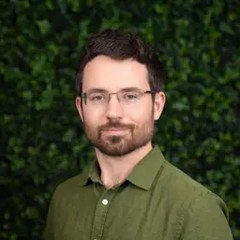 Daniel KokotajloDaniel KokotajloExecutive director, AI Futures ProjectCapability 5Outlook 2
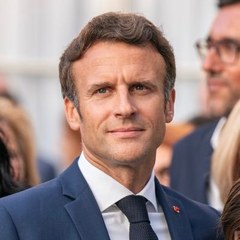 Emmanuel MacronEmmanuel MacronPresident of FranceCapability 4Outlook 3
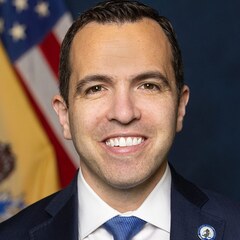 Matthew PlatkinMatthew PlatkinFormer Attorney General of New JerseyCapability 4Outlook 2
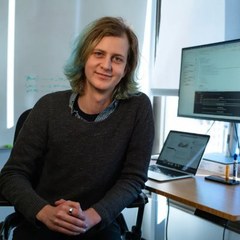 Buck ShlegerisBuck ShlegerisCEO, Redwood ResearchCapability 5Outlook 1
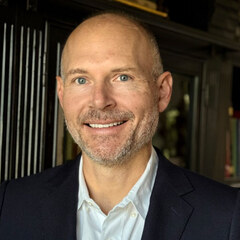 Brendan SteinhauserBrendan SteinhauserCEO, Alliance for Secure AICapability 5Outlook 2
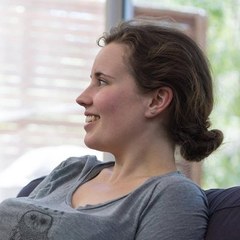 Helen TonerHelen TonerExecutive director, CSETCapability 4Outlook 2
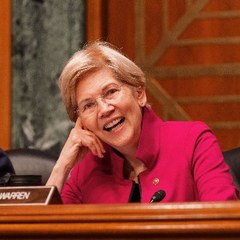 Elizabeth WarrenElizabeth WarrenUS senator, MassachusettsCapability 4Outlook 2
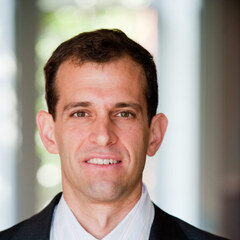 Robert WeissmanRobert WeissmanCo-president, Public CitizenCapability 4Outlook 2
 Pope Leo XIVPope Leo XIVPopeCapability 4Outlook 3
People at the labs and in Brussels who spoke of speed without a verdict. Jack Clark said we are in the early stages of the singularity, Dario Amodei told investors AI is on an exponential and promised cures within a decade while naming the risks, and Ursula von der Leyen said EU leaders discussed how to control frontier AI.
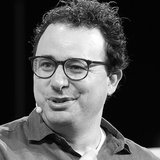 Dario AmodeiDario AmodeiCEO, AnthropicCapability 5Outlook 2
 Jack ClarkJack ClarkCo-founder, AnthropicCapability 5Outlook 3
 Ursula von der LeyenUrsula von der LeyenPresident, European CommissionCapability 4Outlook 3
 Gary MarcusGary MarcusCognitive scientist and AI criticCapability 3Outlook 2
Donald Trump alone. He told 60 Minutes the risk AI executives describe is not nearly as real as they say and can be managed, and that whoever wins the race with China wins.
 Donald TrumpPresident of the United StatesDonald TrumpPresident of the United StatesCapability 4Outlook 4
Said nothing new this week, so their scores carry over.
 Sam AltmanSam AltmanCEO, OpenAICapability 5Outlook 3
 Mikita BalesniMikita BalesniFormer safety researcher, OpenAICapability 5Outlook 2
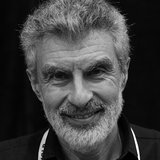 Yoshua BengioYoshua BengioFounder, LawZeroCapability 5Outlook 2
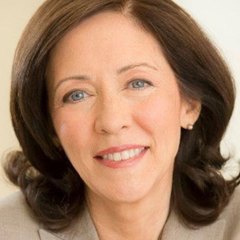 Maria CantwellMaria CantwellUS senator, WashingtonCapability 4Outlook 3
 Bill GatesBill GatesChair, Gates FoundationCapability 4Outlook 1
 Shakeel HashimShakeel HashimEditor, TransformerCapability 5Outlook 3
 Demis HassabisDemis HassabisCEO, Google DeepMindCapability 5Outlook 3
 Jensen HuangJensen HuangCEO, NvidiaCapability 5Outlook 5
 Devin KimDevin KimFormer xAI engineerCapability 4Outlook 2
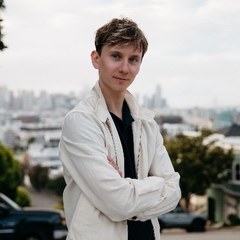 Tomek KorbakTomek KorbakFormer safety researcher, OpenAICapability 5Outlook 2
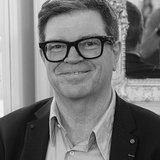 Yann LeCunYann LeCunAMI LabsCapability 2Outlook 3
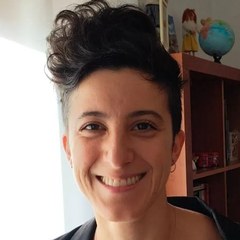 Sofia LiguoriSofia LiguoriFormer research engineer, Google DeepMindCapability 4Outlook 1
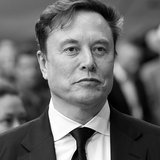 Elon MuskElon MuskSpaceXAICapability 5Outlook 4
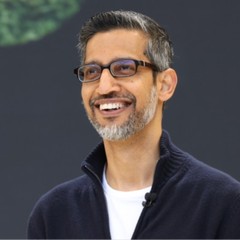 Sundar PichaiSundar PichaiCEO, Google and AlphabetCapability 5Outlook 3
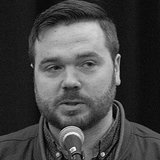 Kevin RooseKevin RooseMachine Gods, NPRCapability 5Outlook 2
 Bernie SandersBernie SandersUS senator, VermontCapability 4Outlook 2
 Brad SmithBrad SmithVice chair and president, MicrosoftCapability 4Outlook 3
 Mark ZuckerbergMark ZuckerbergCEO, MetaCapability 5Outlook 4