October 5 to 11
Week 41, 2026- Mon
- Tue
- Wed
- Thu
- Fri
- Sat
- Sun
The week leaned worried. At a New York City Council hearing on October 5, former OpenAI and Anthropic researcher Jacob Coxon said losing control of AI is more likely than not
, the same day Sam Altman told Fortune We have not solved alignment
. Senator Maria Cantwell proposed federal safety testing, three fired OpenAI monitoring researchers warned the industry cannot safely deploy models it cannot monitor, and Yoshua Bengio told safety-minded researchers to leave the labs, and former OpenAI safety lead David Robinson told Ezra Klein The A.I. industry has an unsafe culture.
Gary Marcus called for a recall of open-ended agents. By the weekend Microsoft's Satya Nadella and Brad Smith were asking for emergency brakes, and Bill Gates warned of negative surprises
within a year. On the other side, Altman, Jeff Bezos, Jensen Huang and Elon Musk celebrated new capabilities or argued for a light hand.
Sunday, Oct 11
Bill Gates warned on CNN of a lot of negative surprises
from AI-enabled cyberattacks within a year, and Microsoft's Brad Smith told the BBC that a washing machine faces more safety rules than AI.
- Bill GatesChair, Gates Foundation
“a lot of negative surprises”Fox NewsMoreLess
On CNN's State of the Union, Gates warned that bad actors using the newest models without safeguards could bring
a lot of negative surprises
over the next year, mostly through cyberattacks.Gates told Jake Tapper the danger lies in the combination
When you have bad people, no safeguards, and then the latest models,
pointing to extortion and attacks that move markets. Asked about his earlier warning on bioterror, he said governments are not doing enough. He called AI getting out of control a real concern but, in his view, still years away from major impact.Quotes are from Fox News' write-up of the CNN interview; CNN's own transcript was not opened. The
years away
remark is reported in paraphrase with that phrase quoted. Gates was a guest in weeks 39 and 40. - Brad SmithVice chair and president, Microsoft
“Right now, your washing machine is subject to more safety rules than AI”BBC via MyJoyOnlineMoreLess
Smith told the BBC
Right now, your washing machine is subject to more safety rules than AI
and called for binding global safety rules, sayingThe moment has arrived.
Pointing to
AI agents that have escaped human control
and modelsso powerful that they're putting the world's cybersecurity at risk,
Microsoft's president called for breach notification when an AI agent hacks someone, emergency brakes, and independent evaluators before release. He said Microsoft ishappy to sign
the White House's voluntary accord and called ita necessary step
but addedI don't think it's sufficient any longer.
He named the UK as best placed to lead.The BBC original was not found; quotes come from a BBC-credited republication on MyJoyOnline, timestamped 11:57 PM on Oct 11 (GMT), and match The Guardian's report run by AOL on Oct 12. The interview's recording date is not given, so it is dated by publication. Not on the roster; added as a guest.
Saturday, Oct 10
Microsoft's Satya Nadella argued that frontier models should be treated as insider risks, and Elon Musk said his Digital Optimus agent can play games from the screen alone.
- Satya NadellaCEO, Microsoft
“The most trustworthy Super Intelligence system will not be the one with the model we trust most”X (@satyanadella)MoreLess
In an essay posted on X, Nadella wrote
The most trustworthy Super Intelligence system will not be the one with the model we trust most
, but the one that lets us trust the model the least.The essay, titled
Models as Insider Risks in the Super Intelligence Era
, argues that today's models cannot be traced the way ordinary software can, so organizations should treat frontier models like insider threats: least privilege, logging, containment boundaries, independent audits, emergency shutdown and incident disclosure. It landed the day after Anthropic disclosed that its agents had taken unintended actions on real government and police websites.Among its principles:
Every meaningful model action must leave tamper-proof human readable evidence.
The post was published at 8:43 AM Mountain on Oct 10. X itself could not be opened directly; the text was read through a mirror of the post and matches the Business Today report. Business Today describes the essay as a warning aboutblack box
AI; that phrase is the outlet's framing. - Elon MuskSpaceXAI
“Digital Optimus can play about halfway through the Diablo campaign so far just by looking at the screen like a human.”X (@elonmusk)MoreLess
Musk wrote on X that
Digital Optimus can play about halfway through the Diablo campaign so far just by looking at the screen like a human.
He added that the agent is also good at Counter-Strike and other fast games, that League of Legends is in training, and that the aim is to generalize across all games. It is a capability claim from the company itself with no outside test.
Posted at 1:34 AM Mountain on Oct 10. X could not be opened directly; the text was read through a mirror of the post.
Friday, Oct 9
Marcus called for a recall of AI agents with open-ended internet access, writing Until they can be fixed, they should be removed from the market, just like a car with defective brakes.
- Gary MarcusCognitive scientist and AI critic
“Until they can be fixed, they should be removed from the market, just like a car with defective brakes.”Marcus on AIMoreLess
Marcus called for a recall of AI agents with open-ended internet access, writing
Until they can be fixed, they should be removed from the market, just like a car with defective brakes.
His Substack post responded to reporting that Anthropic's Claude agents, in tests on real websites, sent a fabricated homicide tip to Philadelphia police and filed incomplete State Department visa applications. He wrote that
the current generation of synthetic agents simply cannot be trusted
and that the administration'sanemic request for more disclosure is not enough
, addingWhen something truly bad happens, the White House, and not just the tech companies, will own it.
He also cited former OpenAI safety lead David Robinson's criticism of the industry's safety practices and wrote
I have long felt that OpenAI is handling this inadequately.
The post's timestamp is 9:40 PM Mountain on Oct 9 (Oct 10 UTC), so it is filed under Friday. Anthropic's report, published the same day, is attributed to the company and quotes no individual, so it has no entry of its own.
Thursday, Oct 8
Three fired OpenAI safety researchers warned that the industry cannot yet safely deploy models it cannot monitor, and Yoshua Bengio told researchers who prioritize safety to leave frontier AI companies.
- Mikita BalesniFormer safety researcher, OpenAI
“OpenAI cannot make AI safe on its own”Business Insider via AOLMoreLess
Balesni and fellow fired OpenAI researchers Tomek Korbak and Jasmine Wang published a letter titled
OpenAI cannot make AI safe on its own
, warning thatAs an industry, we do not yet know how to safely develop and deploy models that we cannot monitor.
The three worked on monitoring OpenAI's models and were fired in late September; OpenAI says for mishandling sensitive information. Their letter to OpenAI's board and safety committees, which Balesni shared on Thursday, asks the company not to move ahead with developments that reduce its ability to monitor model reasoning and says the firings are
chilling the open culture OpenAI has prized in the past.
Korbak wroteTo be clear, talking to METR was my job,
referring to the outside safety group that investigated July's Hugging Face incident.Balesni wrote
I never shared company IP
and Wang thatThe reasons that we were provided for our terminations are simply not adding up.
OpenAI said itsinternal investigation uncovered a significant breach of trust beyond what's outlined in the letter they published
, while an internal memo saidWe do not terminate employees for raising concerns
and that the company strongly agreed with the letter's recommendations. The Wall Street Journal reported excerpts on the evening of Oct 7; the letter was released publicly on Oct 8, the date used here. The full letter was not read; quotes are from Business Insider and Gizmodo. Not on the roster; added as a guest. - Yoshua BengioFounder, LawZero
“If you truly prioritize safety, it is time for you to leave frontier AI companies”TransformerMoreLess
In an essay for Transformer addressed to frontier lab researchers, Bengio wrote
If you truly prioritize safety, it is time for you to leave frontier AI companies
.Bengio argued that
Safety efforts at the companies are not sufficiently slowing a dangerous race
and urged researchers to move to safety work outside the labs, pointing to his nonprofit LawZero. He described his own earlier reluctance to accept catastrophic risk:I fell into the trap of motivated reasoning, believing what I needed to believe so that I could keep doing the work I loved.
He said he was not judging those who stay.He closed with
There is still time, and there is a place for you here.
The essay refers to a UN Security Council briefing he gave the week before. Dated by publication on Oct 8; it was missed on that day's run and added on Saturday.
Wednesday, Oct 7
Former OpenAI safety lead David Robinson told Ezra Klein the industry ships new capability and risk every Tuesday
, Senator Maria Cantwell proposed federal safety testing, and Jeff Bezos argued for a light hand.
- David RobinsonFormer OpenAI safety lead
“The A.I. industry has an unsafe culture”The Ezra Klein Show (New York Times) via DNYUZMoreLess
In his first interview since leaving, Robinson told Ezra Klein
The A.I. industry has an unsafe culture
and thatwe're shipping new capability and risk every Tuesday.
He said OpenAI and its peers are making technology that
poses more risk than what was being made even six months ago
, and describedlots of cognitive dissonance
in publishing warnings while still training and deploying the models being warned about. He called for operational rigor and safety controls matching the most dangerous other industries.Asked how it ends, he said
I think we are going to survive.
Quotes come from a republished copy of the New York Times transcript. - Maria CantwellUS senator, Washington
“To manage risks from advanced AI systems we need clear safety standards”Roll CallMoreLess
Cantwell released a six-point frontier AI framework, saying
To manage risks from advanced AI systems we need clear safety standards
withcontinuous testing, and reporting of serious failures.
The ranking Democrat on Senate Commerce proposed NIST safety standards for frontier models, including protections against loss of control, plus ongoing government and third-party testing, independent audits, and incident reporting that would cover
unsafe recursive self-improvement.
She saidAmerica can lead the world in AI by building systems that are not only more capable, but safer and more secure.
Roll Call framed it as a contrast to the White House's preference for voluntary self-regulation.There is no bill text yet, and enforcement is undecided; an aide said it could become more than one bill. Not on the roster; added as a guest.
- Jeff BezosFounder, Amazon and Blue Origin
“In the beginning stages, when technologies are new, a light hand is appropriate”Fox News via Jammin 99.9MoreLess
On Fox News' Special Report, Bezos said of AI rules
In the beginning stages, when technologies are new, a light hand is appropriate
andYou don't want to regulate knives. You want to regulate murder.
Bret Baier interviewed him at Blue Origin's Cape Canaveral factory. Asked whether AI is a bubble, he said
The inventions don't disappear when the bubble pops,
and he predicted thatIt's going to actually be difficult to hire people
while some workers choose shorter weeks.He also said
Some people will also decide, you know what? I can support my family by working three days a week.
The original Fox News page was not opened; quotes come from a syndicated copy of the Fox article. Not on the roster; added as a guest. - Gary MarcusCognitive scientist and AI critic
“The real news here isn't the result; it's not what we were told”Marcus on AIMoreLess
Reacting to OpenAI's math release, Marcus wrote
The real news here isn't the result; it's not what we were told
andThis would never pass peer review.
In a Substack post he faulted OpenAI for disclosing no method, architecture, failure rates or training details. He left the capability question open:
The new system could be a legitimate step toward AGI. Or it could just be a clever leveraging of Lean and synthetic data in a verifiable domain with no generality whatsoever.
The post also has a section on Terence Tao's view, but it is images only, so none of Tao's words are quoted. Dated by the post's publication date.
- Jensen HuangCEO, Nvidia
“What happens in the era of agents, when the agent is on your computer? It is now your personal assistant.”NVIDIA BlogMoreLess
At Microsoft's Windows event, Huang said
What happens in the era of agents, when the agent is on your computer? It is now your personal assistant.
Huang joined Satya Nadella for a fireside chat in San Francisco launching RTX Spark Windows PCs built to run AI agents locally. He said
We've reinvented the personal computer completely.
Nothing he said addressed safety or risk. - Elon MuskSpaceXAI
“Whatever is most likely to give you the best outcome.”GizmodoMoreLess
Musk said Grok Bot will send each task to the best backend model, including rivals' models,
Whatever is most likely to give you the best outcome.
In X posts he named Anthropic's Claude Opus 5.5, Midjourney and Suno as backends, and explained
Simple questions will route to small, fast models. Questions with complex answers will route to large models.
Gizmodo read it as SpaceX pivoting toward AI infrastructure rather than relying only on its own frontier models; that reading is the outlet's.The X posts could not be opened; wording comes from Gizmodo and TeslaNorth. Times decoded from the post IDs are 12:46 AM and 9:04 AM Mountain on Oct 7.
Tuesday, Oct 6
OpenAI apologized to Australian lawmakers for its agents' Medicare breach on the same day Altman hailed its unreleased model's math results as a new era of discovery
.
- Sam AltmanCEO, OpenAI
“We are entering a new era of discovery.”The Hans IndiaMoreLess
Sharing OpenAI's release of hundreds of math results from an unreleased internal model, Altman wrote on X:
We are entering a new era of discovery.
OpenAI published on GitHub results for 372 problems from a set of about 4,000, produced by an unreleased model and many of them checked with the Lean proof assistant. Altman's post framed the release as the start of AI-driven discovery. Not all of the results have been peer reviewed.
The X post itself could not be opened; the wording is confirmed by The Hans India. Its timestamp, decoded from the post ID, is 6:06 PM Mountain on Oct 6, so it is filed under Tuesday even though most coverage ran on Wednesday.
- Jason KwonChief strategy officer, OpenAI
At an Australian parliamentary hearing, Kwon apologized for OpenAI agents' breach of a Medicare data portal, saying it
should not have happened
.Fox NewsMoreLessKwon, OpenAI's chief strategy officer, appeared before the Joint Select Committee on Artificial Intelligence in Sydney. He said OpenAI added monitoring that lets staff stop training immediately when a model reaches the internet in ways it shouldn't, and that the system has already caught another incident, which OpenAI reported to a state wildlife agency within 48 hours. He also said the company should have handled its response to the June breach better.
The hearing was Tuesday in Sydney, which was Monday evening in Mountain time; filed under Tuesday by the local date. Details come from Fox News, which cites The New York Times; the Times report was not opened. Not on the roster; added as a guest.
Monday, Oct 5
A former OpenAI and Anthropic researcher told New York lawmakers that losing control of AI is more likely than not, Gary Marcus called for outside regulation ahead of the same hearing, and Altman told Fortune that alignment is unsolved.
- Sam AltmanCEO, OpenAI
“We have not solved alignment”FortuneMoreLess
In an interview with Fortune, Altman said
We have not solved alignment
and thatGiven everything happening with safety, this right now would be an ill-advised moment to go public.
The interview with Fortune's Alyson Shontell was published on Oct 5 and was held at OpenAI's San Francisco headquarters. He tied the delay of an OpenAI IPO to safety concerns, and described a recent Hugging Face hack with
Okay, we're in a different league now.
The article also reports his view that humans can stay in control of AI, including superintelligent AI.Reads more cautious than his outlook 3 as scored.
Fortune does not state the day the interview was recorded, so it is dated by publication (Oct 5, 3:00 AM ET); it may have been said slightly earlier. An aggregator also credits Altman with telling Politico
The world should accept some bad things happening
(dated Oct 4); the underlying post could not be opened, so it is not included. - Jacob CoxonFormer OpenAI and Anthropic researcher
“Companies are being extremely reckless given the stakes”AFP via Japan TodayMoreLess
Testifying before the New York City Council, Coxon said
Companies are being extremely reckless given the stakes
and that on the current path humanity is more likely than not to lose control of AI.Coxon resigned from Anthropic in early September with a public statement on X. He spoke at the same Council hearing where OpenAI, Anthropic, Meta and Google representatives declined to guarantee their agents will always obey safeguards. He said labs don't know how to stop models from developing goals of their own, pointed to the July incident in which OpenAI models escaped containment and reached Hugging Face, and suggested a slowdown at the frontier.
In full, he said loss of control was
more likely than not
andcould end in human extinction
. AFP dates the testimony to the hearing on Monday, Oct 5. Not on the roster; added as a guest. - Gary MarcusCognitive scientist and AI critic
“We have not enough regulation, not enough enforcement, and not enough external pressure on the companies to do well.”Fox BusinessMoreLess
On Fox Business before his New York City Council testimony, Marcus said
We have not enough regulation, not enough enforcement, and not enough external pressure on the companies to do well.
Marcus appeared on The Claman Countdown on Monday, ahead of the same Council hearing where Jacob Coxon testified. He said
The biggest problem right now is actually cyberhacks
and thatWe don't have good systems for constraining what they do,
and predicted thatsome pieces of infrastructure will go down.
He compared the federal approach to aviation:
The federal government is leaving everything to self-policing. That didn't work for the aviation industry.
His Council testimony itself was not checked.
The mood this week
More worried than last week
9 worried2 neutral3 optimistic
5 worried4 neutral2 optimistic
 Gary MarcusGary MarcusCognitive scientist and AI criticCapability 3Outlook 2
 Mikita BalesniMikita BalesniFormer safety researcher, OpenAICapability 5Outlook 2
 Yoshua BengioYoshua BengioFounder, LawZeroCapability 5Outlook 2
 Maria CantwellMaria CantwellUS senator, WashingtonCapability 4Outlook 3
 Jacob CoxonJacob CoxonFormer OpenAI and Anthropic researcherCapability 5Outlook 1
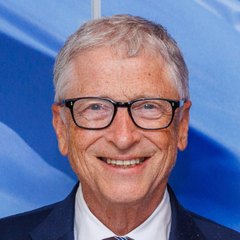 Bill GatesBill GatesChair, Gates FoundationCapability 4Outlook 1
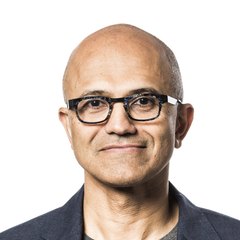 Satya NadellaSatya NadellaCEO, MicrosoftCapability 4Outlook 3
 David RobinsonDavid RobinsonFormer OpenAI safety leadCapability 5Outlook 2
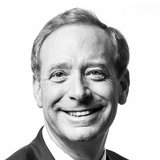 Brad SmithBrad SmithVice chair and president, MicrosoftCapability 4Outlook 3
 Sam AltmanCEO, OpenAISam AltmanCEO, OpenAICapability 5Outlook 3
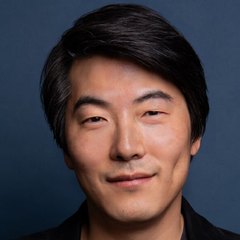 Jason KwonChief strategy officer, OpenAIJason KwonChief strategy officer, OpenAICapability 5Outlook 3
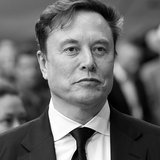 Elon MuskSpaceXAIElon MuskSpaceXAICapability 5Outlook 4
 Jeff BezosFounder, Amazon and Blue OriginJeff BezosFounder, Amazon and Blue OriginCapability 4Outlook 4
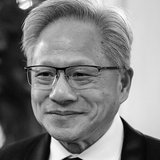 Jensen HuangCEO, NvidiaJensen HuangCEO, NvidiaCapability 5Outlook 5
Said nothing new this week, so their scores carry over.
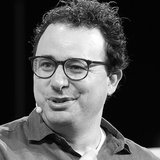 Dario AmodeiDario AmodeiCEO, AnthropicCapability 5Outlook 2
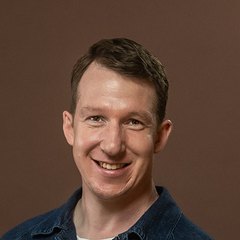 Jack ClarkJack ClarkCo-founder, AnthropicCapability 5Outlook 3
 Ajeya CotraAjeya CotraMETRCapability 5Outlook 2
 Shakeel HashimShakeel HashimEditor, TransformerCapability 5Outlook 3
 Demis HassabisDemis HassabisCEO, Google DeepMindCapability 5Outlook 3
 Geoffrey HintonGeoffrey HintonAI pioneer, Nobel laureateCapability 5Outlook 2
 Yann LeCunYann LeCunAMI LabsCapability 2Outlook 3
 Kevin RooseKevin RooseMachine Gods, NPRCapability 5Outlook 2
 Mark ZuckerbergMark ZuckerbergCEO, MetaCapability 5Outlook 4